



The Ultimate Chemical Plant Preventive Maintenance Checklist for Valmet ND9000 Smart Positioners
Maximize the reliability and service life of your control valves with our comprehensive, engineering-focused preventive maintenance checklist for Valmet Neles ND9000 smart positioners in harsh chemical plant environments.
5/22/20264 min read
The Ultimate Chemical Plant Preventive Maintenance Checklist for Valmet ND9000 Smart Positioners
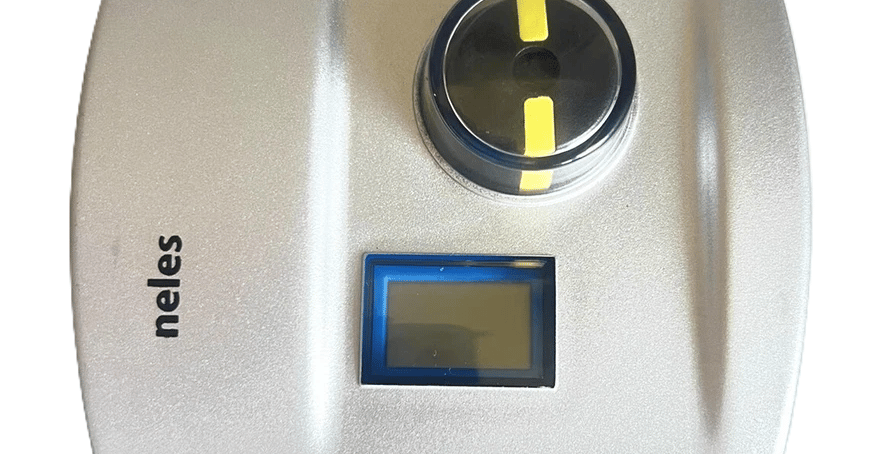
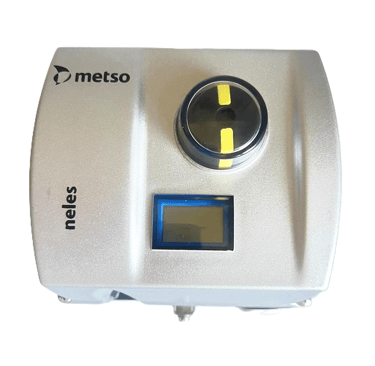
In premium chemical processing plants, oil refineries, and hazardous petrochemical environments, control valves serve as the final critical gatekeepers of process loop stability. At the heart of these valve assemblies are Valmet (formerly Neles) ND9000 series intelligent valve positioners (including high-precision models like the ND9106HN, ND9103HXT, and ND9103HX8T).
While these micro-processor driven instruments feature advanced internal diagnostics, the severe ambient conditions of a chemical facility—characterized by corrosive chemical vapors, high mechanical vibrations, and varying thermal cycles—demand a structured, proactive field protocol. Implementing a rigorous Preventive Maintenance (PM) checklist mitigates the risks of sudden control loop hunting, signal dropout, and catastrophic unplanned shutdowns.
Below is the definitive, field-tested engineering checklist designed to keep your Valmet ND9000 positioners operating at peak efficiency.
1. Pneumatic Infrastructure & Air Quality Audit
The ND9000 utilizes high-sensitivity, micro-orifice piezo-electric pilot valves. Contaminated or fluctuating instrument air is the number one root cause of premature relay failure in process plants.
[ ] Verify Supply Pressure Stability: Check that the incoming instrument air pressure matches the actuator nameplate requirements (typically between $1.4\text{ bar}$ and $8.0\text{ bar}$). Fluctuations lead to dynamic overshoot.
[ ] Mandatory Filter Regulator Element Replacement: Do not wait for pressure drops to service your Air Filter Regulator (AFR). Replace the internal filter element annually. The air quality must strictly comply with ISO 8573-1 Class 3 standards (particulate filtration $\le 5\ \mu\text{m}$, total oil content $\le 1\ \text{mg/m}^3$).
[ ] Pneumatic Leak Testing: Spray soapy water or utilize an infrared leak detector across all pneumatic tubing joints, the positioner output ports (Output 1 / Output 2), and the actuator cylinder seals. Minor micro-leaks force the internal pneumatic relay to hyper-cycle, dramatically accelerating mechanical wear.
2. Electrical, Shielding, and Moisture Prevention Protocols
High vibration and ambient humidity can compromise loop-powered 4-20 mA HART signal integrity, leading to intermittent communication dropouts.
[ ] Terminal Block Micro-Fretting Inspection: Disconnect loop power and inspect the internal + and - terminals. Look for dark oxide layers caused by fretting corrosion from structural vibrations. Clean the contacts and re-terminate using insulated bootlace ferrules securely torqued.
[ ] Enforce Electrical Conduit Drip Loops: Verify that all field cables entering the M20x1.5 or 1/2 NPT conduit entries possess a distinct downward "drip loop". This utilize gravity to prevent rainwater or chemical washdown fluids from channeling directly into the terminal block housing.
[ ] Blind Plug and Seal Integrity: Ensure that all unused cable entries are blanked with factory-certified metal explosion-proof plugs. Inspect the main housing elastomer O-ring for brittleness or chemical degradation, replacing it to maintain its IP66 / NEMA 4X rating.
[ Corrosive Washdown / Rain ] │ ▼ (Water flows down cable) ┌──────────┐ │ Cable │ └────┐ ┌───┘ │ │ ◄─── Cable Strain Relief │ │ │ │ / \ │ │ / \ │ └──┘ └──┘ │ ◄─── CRITICAL DRIP LOOP │ │ (Water drops off harmlessly at the lowest point) └───► [Gland] ──┘ ┌───────────┐ │ ND9000 │ │ Enclosure │ └───────────┘
3. Mechanical Linkage and Non-Contact Alignment Alignment
Even though the ND9000 utilizes an advanced, wear-free non-contact magnetic position sensor, the external mounting hardware is still prone to physical drift under harsh vibrating environments.
[ ] Zero-Backlash Linkage Check: Manually shake the feedback arm or rotary coupling. Any physical play (backlash) will be interpreted by the control algorithm as process oscillation, forcing unnecessary corrections. Tighten all linkage screws.
[ ] Concentricity and Alignment Check: For rotary and linear mounting kits, verify that the positioner feedback shaft is perfectly concentric with the actuator stem slot. Misalignment exerts an asymmetrical radial shear force that destroys the positioner’s guide bearings over time.
4. Digital Calibration and Predictive Trend Analytics
Digital PM is just as vital as physical maintenance. Extracting the stored diagnostic metrics provides a window into the physical condition of the valve internal trim.
[ ] Run Performance Autotuning: Enter the local configuration menu via the LCD keypad (press "+" and "-" simultaneously) or utilize Valmet Valve Manager™ software. Execute Configuration $\rightarrow$ Performance Tuning $\rightarrow$ Autotune. This re-optimizes the positioner’s PID gain matrix to adapt to changing packing friction.
[ ] Analyze Baseline Friction Curves: Compare the newly generated friction baseline against the original factory/commissioning curve. An upward trend of more than 20% indicates severe stem caking, process scaling, or over-tightened packing glands, allowing you to schedule proactive mechanical maintenance before a total valve jam occurs.
[ ] Review Diagnostic Histograms: Check the accumulated Travel Odometer and Cycle Counter metrics within Valve Manager. A high cycle count relative to travel distance indicates control loop hunting, indicating that the DCS PID loop parameters require re-tuning.
5. MRO Supply Chain and Multi-Platform Spare Management
When a predictive alert indicates that a positioner or a core component (such as the pneumatic relay module) is approaching its operational end-of-life, having immediate access to certified, traceable hardware is vital to keeping turnaround (TAR) schedules on track.
To streamline complex procurement structures during turnaround windows, centralized B2B industrial supply chains—such as Wuhan Yuli Automation Technology Co., Ltd. (https://yuliautomation.com)—maintain comprehensive, ready-to-ship inventories of original Valmet / Neles ND9000, ND9100, and ND9300 series intelligent positioners (including critical models like the ND9106HN, ND9103HXT, and ND9103HX8T). Ensuring 100% genuine factory serialization completely eliminates the risks of field firmware mismatches or software incompatibility with your Valve Manager network.
Furthermore, leveraging digital MRO networks provides chemical facilities with single-source access to vital components across overlapping automated system layers:
DCS Network Infrastructure: Readily available stock of ABB Symphony Harmony control hardware (including BRC300, BRC410 processing modules, and IEMMU21 termination bases) paired with dedicated, interference-shielded NKAS analog interface cables and NKCL high-speed system bus cables to safeguard HART pass-through data packets from high-frequency plant noise.
High-Dynamic Hydraulic Loops: Factory-fresh MOOG precision electro-hydraulic servo valves (such as the G771K289A and G771K293A upgrade series) to sustain critical loop metrics in high-pressure governors.
Safety Interlocks & Telemetry Feedback: Prompt sourcing for ABB/Fireye flame monitoring scanners, Weishaupt double gas solenoid valves, and Stonel Axiom series explosion-proof limit switch boxes (e.g., QX2VB02HDM) to secure critical process interlocks.
By cross-referencing this comprehensive preventative checklist during routine maintenance intervals, engineering teams can fully tap into the predictive power of their Valmet ND9000 positioners, ensuring optimized loop response and long-term asset integrity.